Portuguese knitting know-how shaping the future of premium knitwear
This edition of Première Vision Paris, as every February, turns the spotlight on savoir-faire: the tacit, technical knowledge that converts fibre into product and craft into competitive advantage. The show’s international offer makes it a unique opportunity to discover exceptional know-hows specific to the different continents, countries and even cities. Beyond trend reports and colour cards, intrinsically linked to the industry, Première Vision remains one of the few places where buyers and designers can discover country-specific mastery, the particularities that set one textile cluster apart from another.
In our last article, we have covered the French savoir-faire of Calais-Caudry’s Leavers laces, in this one, we will be highlighting Portugal’s excellence through its knitting mills. Indeed, Portugal is where technology reinforces tradition and where craft meets industrial intelligence—especially in the northern region of Portugal, where historic textile clusters combine decades of circular-knitting expertise, highly technical machineries, vertical integration, and always quite avant-garde approach to sustainability that has repositioned the country as Europe’s premier supplier for high-quality, innovative and accessible knitwear.
A short history, long roots
 ©Spiber X Positive Materials ©Spiber X Positive Materials | Portugal has a long-standing tradition in the textile and clothing industry with a unique set of conditions and existing know-hows. Its textile tradition predates the Industrial Revolution, but it was the 20th century’s regional clustering, with spinning, weaving, knitting, dyeing and finishing located within a compact geographical radius, that created today’s competitive ecosystem. The Ave and Cávado valleys, (with emphasis for apparel on Braga and Barcelos) are still where skills are concentrated: engineers, technicians and four generations of family ownership sit alongside the latest circular knitting machines. That combination of custodial knowledge and capital investment matters: it allows suppliers to move seamlessly from yarn to fabric to finished garment, shortening lead times and enabling more rigorous traceability than most other European sourcing options. According to EURATEX, Portugal is the seventh largest exporter of textile products in the European Union, the main export destination being Spain and France. |
“Portugal presents a highly qualified workforce, supported by its renowned universities.”
“Invest in Portugal, Textiles & Clothing Industry Report” 2024
Despite the various crises that have affected the industry over the decades, the northern textile cluster has been able to adapt. Companies have invested in technology, R&D, product differentiation, and design, shifting from a mass production logic to a value-added model. The result is visible: international brands increasingly trust the quality "Made in Portugal".
And circular knitting, in particular, is the technique by which much of Portugal’s knit fabric strength has been forged. Machines that produce a very wide range of creative and technical knits, from fine-gauge jersey to complex jacquard and double-face constructions, have been central to the region’s specialism. Portuguese mills have become particularly adept at engineering hand, drape and dimensional stability on circular machines: what began as mass-market jersey production has become a platform for sophisticated fabric innovation, from yarn-dyed stripes and engineered jacquards to technical, performance-enhanced constructions for sports and athleisure.
Sidónios, established in the 1980s, is representative of a cohort of mills that have combined family ownership with investments in flat-knit and finished goods, supporting brands that require stable quality across volumes. Martket leaders in circular knits, A. Sampaio & Filhos has built a reputation over decades for sophisticated circular fabrics and for pushing machine capabilities into new, cloth-centric territory. The company emphasises technical development, often tailoring constructions to brand briefs that require precise hands, specific behaviours and uses. | 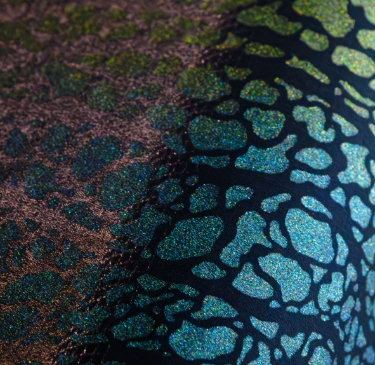 ©PM X SPARXELL Natural Camouflage ©PM X SPARXELL Natural Camouflage |
Innovation and sustainability at the heart of transformation
Sustainability in Portugal’s knit sector has become one of the strategic pillars. It is has evolved from compliance to real competitiveness. Many companies in the region now focus on the circular economy, textile recycling, eco-friendly raw materials, energy-efficient production and full transparency. They now publish certificates (Oeko-Tex, GOTS, GRS…), allow deeper traceability, run closed-loop dyeing systems, and experiment with lower impact and next generation fibres (such as regenerative, bio-based, biofabricated fibres), as we can see with Vilartex, NGS Malhas or Casa de Malha.
Similarly, Positive Materials is one of those standing out in the contemporary textile landscape for their integration of sustainability-driven innovation, marrying advanced material science with manufacturing rigour, may it be in finishings, performances or novel fibre integration. Positive Materials emphasise industrial-scale validation of emerging technologies, from fibre sourcing and spinning through knitting, dyeing and finishing, under a fully traceable production system aligned with high environmental standards. Part of PDS Group, they collaborate with pioneering technology partners such as Nature Coatings (wood-based black pigments) and Spinnova (wood and textile waste based fibres), renowned biotech company Spiber (Brewed ProteinTM fibre), Evrnu® (a lyocell regenerated from cotton textile waste), or microbial dye producer Octarine Bio, just to name a few.
All these initiatives reflect the Portuguese mills role not only as a manufacturers but through a collaborative approach, as genuine facilitators of sustainable material adoption across the textile value chain.
Academic and sector research shows Portuguese companies adopting circular business models: reuse programmes, strategic recycling partnerships, and product designs that anticipate repair and extended use. That evolution is not universal, but it is concentrated among the firms that export technical fabrics and collaborate directly with brands on product development. For buyers, the difference is tangible: mills prepared to engineer durability and end-of-life pathways often provide a better sustainability ROI than suppliers who only offer a certified fibre label.
Technological depth and accessible quality
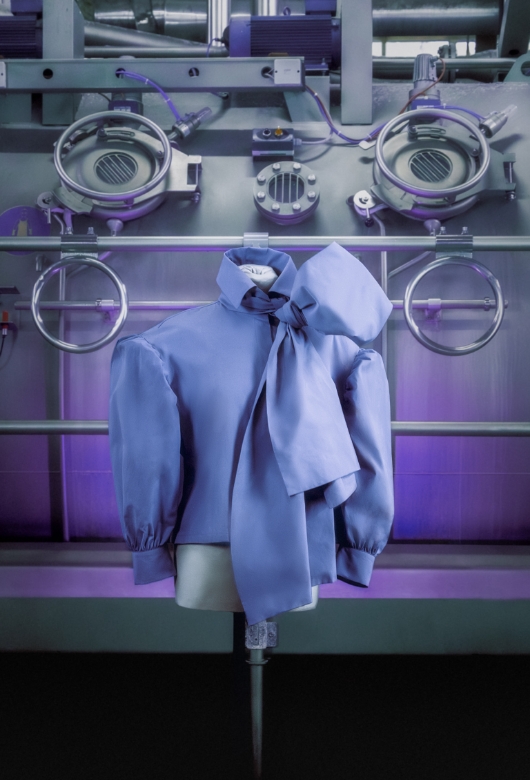 ©Octarine x Positive Materials ©Octarine x Positive Materials | And technology is really the lever for the acceleration of this transition. Portugal has invested heavily in machine parks, lab facilities and finishing technologies that were once the preserve of northern Europe. These are not simply modern machines deployed to make commodity goods faster; they are instruments for adding value, novel mechanical finishes, compacting, enzyme processing, and digital dyeing systems that reduce water and energy consumption, sensor and cameras and AI assisted default detection…These all define the Portuguese proposition: extraordinarily high wet and dry-finishing standards, paired with production economics that deliver premium results at accessible prices. Those margins are the pragmatic reason so many European brands, particularly those seeking a nearshore balance between sustainability and cost, prefer Portugal. One of the smart-tech companies born in Portugal, Smartex, show how the real transformers of the industry, first in Portugal, now deploy their solutions internationally. |
Vertical integration as the commercial and environmental advantage
But perhaps the most valuable of Portugal’s selling points is its vertical integration. Within relatively short distances, a brand can work with a mill that controls spinning, knitting, dyeing, finishing and, often, small-run garment assembly. Practical advantages are obvious: speed, lower minimum order quantities, tighter quality control, personalisation, adaptability and flexibility. But the CSR benefits are just as essential: when the chain is compact and digitally monitored, traceability becomes feasible: buyers can trace a fabric back to a yarn batch, a dye lot or a supplier certificate. For brands wrestling with regulation and consumer scrutiny, that proximity reduces complexity and risk. And a leading example would be Valerius Group with their circular unit Valerius 360°, integrating the end of life into their reflexion, converting textile waste into new textiles and finished products.
Thus, nearshoring to Portugal is a pragmatic, commercially rational strategy that addresses current supply-chain risk and regulatory pressure. Extended producer responsibility schemes, due-diligence laws, and consumer demand for verifiable provenance are all easier met by portuguese mills, whose virtue of proximity, integrated supply chains and stronger governance, reduce logistical friction and make traceability operational rather than aspirational. For buyers balancing speed, price and sustainability, that becomes decisive.
Craft, competence and credibility
In that sense, Portuguese knitting mills combine vertical traceability, applied sustainability, and technical depth with in-house labs, finishing capability and close R&D collaboration. And often they are more than able, and quick to respond to brands co-development of a made to measure fabric, rather than specifying an off-the-shelf item. And for brands constrained by minimum order quantities, Portugal’s low-MOQ flexibility is a commercial asset; for those intent on reducing scope-3 risk, the compact supply chain is an environmental one.
| So they are not merely competent; they are, (as in sportswear) leading the change, repositioning knitwear as an area where innovation, craft intelligence, technological investment and sustainability converge. The country’s dense industrial geography makes co-development with a mill realistic; its investment in finishing technologies and certification programmes makes that co-development credible; and its cost profile makes the final product commercially viable for brands that need to marry accessibility and quality. For buyers attending Première Vision Paris, Portugal’s exhibitors will offer more than fabric swatches: they will offer engineered solutions, developed with a clear view of lifecycle performance and with documentation to match. | 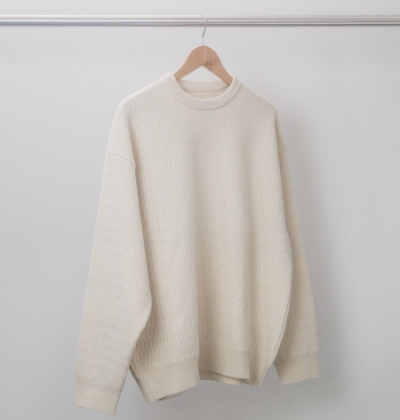 ©SPIBER X Positive Materials Knitwear ©SPIBER X Positive Materials Knitwear |
The new Portuguese knitwear narrative is at once technical, traceable and, importantly, ready for the modern market’s high demands of quality, responsibility, flexibility and competitiveness.
 |  |