Visions Episode 11: Towards a new cycle of innovation
Visions is a series of forward-looking articles that explores the world of tomorrow — its contours, models, and challenges. Through the eyes of experts from various fields, the Visions series undertakes an exploration of our societies, adopting multiple viewpoints to address several questions: How can we imagine the future today? What emerging trends or subtle signals should we pay attention to identify and anticipate new models and ways of living, creating, producing, and consuming? By gathering observations, analyses, and future-oriented insights in fields ranging from multidisciplinary creation to economics, sustainability, and new technologies, Première Vision aims to inform, inspire and provide key resources for creative Fashion professionals. |
| Frédéric Loeb is no clairvoyant; he is an analyst. He advises major players in both luxury and mass-market consumer goods on strategy across fields as varied as fashion, beauty, food, and hospitality. For his clients, he anticipates long-term consumer trends, develops innovative products and services, and helps enhance the competitiveness and performance of business models. To do so, he adopts a historical perspective, tracing developments back through the centuries, stopping at the 16th century, revisiting key turning points in industrial history, and examining everyday life under a microscope. |  |
The Two Driving Forces of Innovation
Two major guiding principles underpin Loeb’s thinking. The first is that prosperity breeds complacency. When business is thriving, creativity tends to fade and successful sectors fall asleep. Historically, he observes, the great moments of French style — Versailles after 1685, the late 18th century, and the Art Deco movement — have coincided with periods of recovery following crises or conflicts. The second principle emerged in the second half of the 20th century and reflects a perverse effect of consumer society: technological progress tends to amplify the law of least effort.
“Looking back over the past 50 years, the inventions associated with Apple and Steve Jobs all reinforce this logic. Everything is concentrated in a single object: the smartphone. From my keyboard, I can order food and be eating within 15 minutes without having to move. The mammoth no longer needs to be hunted; it comes to me pre-cut, cooked, and ready to consume. Today, I can book a trip to the other side of the world in five clicks. There is no need to save up: I check price-comparison sites for low-cost airlines and I find what I’m looking for. Likewise, if I spot a garment on social media, I open the app, I click, and a few days later the product arrives at my door”.
The Platform Economy: Turning Consumers into Guinea Pigs in a Giant Real-Time Market Study
 |
These new practices have given rise to new business models. “When consumers visit the Shein website, for example, they believe that the image they click on corresponds to a real garment,” explains Loeb. “In reality, it is a computer-generated image. It is only on the basis of clicks, and therefore of demand, that the Chinese fast-fashion giant decides to launch production, effectively turning consumers into participants in a vast, real-time market research experiment, with disastrous consequences for ecological balance.” Loeb poses a deliberately provocative question: “Why has the West not adapted the efficiency of this model to its own rules?” |
“Blocking Shein or other Alibaba companies is not necessarily the answer. Rather, the challenge is to strengthen the efficiency of our production systems through technology while preserving our standards — fair wages, social protection, a controlled carbon footprint, and sustainability — in order to better showcase our creativity.”
Reclaiming a Genuine Creative Value Proposition: The Challenge of a New Cycle
Loeb reiterates the need to reignite creativity. In his view, creating something truly new entails such risk and personal commitment that it can only arise from the creator’s own need for expression. It is this will that generates desirability. True moments of creative rupture stem from bold, innovative offerings, such as the transition from the BlackBerry to the touchscreen smartphone. Yet, he argues, by multiplying market studies and following trends based solely on demand, we ultimately create nothing. Brands end up merely copying one another.
“Our real strength in Europe compared with platforms is that they operate in a logic of easy imitation, while we possess the resources and know-how to create. I like to say, provocatively, that we do not have a demand problem, but a supply problem. We are facing the end of a cycle — the end of an era — and everything must be reinvented. That is precisely what makes this moment so exciting.”
| At this turning point, much is being said about artificial intelligence and digital acceleration. Loeb tempers these concerns by placing them in perspective. “There is nothing to fear from AI. It is simply a new stage of development following computers and social networks. AI does nothing more than enable faster, more intelligent interaction with large volumes of data. It is merely another step in the automated processing of that data.” | 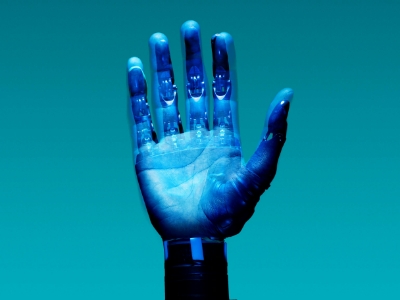 |
Generations Unequally Equipped for Innovation
Faced with this profound systemic shift, which generations are best positioned to detect weak signals and drive innovation? According to Loeb, those under 25, Generation Z, born between 1997 and 2010, have the capacity to propel change. Generation X, born between 1965 and 1978, having experienced the old world and been compelled to adapt to the new, is now reawakening. By contrast, the middle generation, Generation Y (1979-1995), appears mired in the contradictions of its own life choices.
Fashion Rises to the Challenge
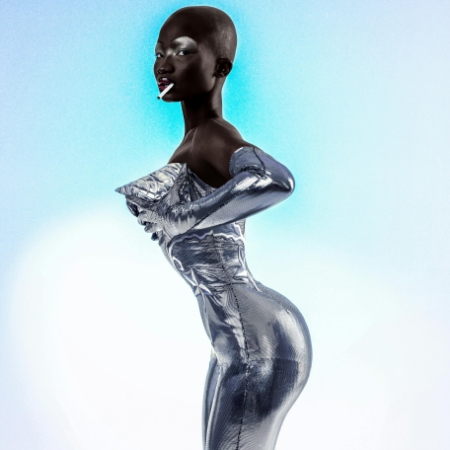 |
Speaking of ruptures, the relative crisis facing luxury brands has called their fundamentals into question, and the creative engine already appears to be restarting. “Weak signs of renewed creativity appeared during the recent September Fashion Weeks in Milan and Paris,” says Loeb. “There is a renewed focus on the creation of offerings. I am very optimistic, because I see a generation of both young and more established designers reviving the French spirit. “What is the French spirit? One foot in tradition, one foot in modernity, driven by inspiration and vision, as we saw with Christian Lacroix in the 1980s, John Galliano in the late 1990s, Martin Margiela, and Alexander McQueen. What they had in common was a conscious distancing from an all-marketing approach.” |
Food, Artisanal Craftsmanship, Decoration, And Design... Creativity Is on the Rise Again
Among the other sectors that have embarked on this process of reinvention, one stands out in particular. An area Loeb knows well, as an advisor to Sirha Food, the world’s largest food-service trade fair: food itself. “Under pressure from delivery platforms, we have seen the return of all those small, creative bistros that everyone loves to frequent. There have never been as many restaurant openings in the past 10 years as since the emergence of these platforms. Likewise, French artisanal craftsmanship has never been so vibrant. The Révélations salon at the Grand Palais is a striking illustration of this renewed vitality. The furniture sector is also poised for a revival, driven by this growing enthusiasm for craftsmanship. Across Europe, the world of interior design is demonstrating a level of creativity unmatched in Asia.”
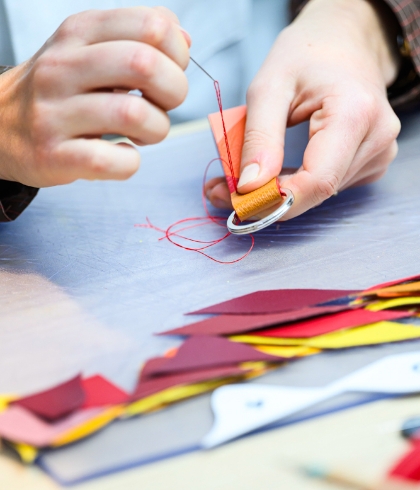
A similar surge can be observed across the arts, cinema, video games, the visual arts, and more broadly, graphic novels. This return to the hand is also evident in high-end watchmaking. It is no coincidence that younger generations are rediscovering the pleasure of mechanical watches, just as handwriting itself is making a comeback. It is also worth remembering that 50 percent of luxury consumers are over the age of 50. The future is taking shape as a return to craftsmanship, to the hand, and to physical presence in stores. |
 |
The Future Lies in the Hand—and Art Shows Us the Way
What form will this reinvention take, whose first signs are now beginning to emerge? “As always, it will draw on the past,” says Loeb. “Brands will continue to look back to experience and culture. Ultimately, everyone is realizing that the digital world is circular and feeds on itself. The answer lies in the hand, the true medium of the future. We see it in the renewed interest in craftsmanship. We see it among contemporary artists. Figurative painting is making a strong comeback. The current exhibition of artists Eva Jospin and Claire Tabouret at the Grand Palais illustrates this beautifully.”
What place does Europe occupy in this global reconfiguration? “A process of fragmentation is underway. The United States represents a formidable market, but culturally we are rapidly moving away from it. India is developing quickly, and China too, of course,” says Loeb. “European creativity retains a distinctive competitive advantage and will continue to do so if it combines speed with ethics and continues to invest, as it has both the resources and the singularity to succeed.”
Discover other articles in the Visions series
| READ ALL ARTICLES |