
Japan’s textile masters weaving perfection through innovation
In the Japanese textile sector, tradition and technology intertwine to create fabrics of extraordinary quality and performance. And while thinking of Japanese textiles, denim and its deeply rooted indigo culture often come to mind first - but Japan’s mills draw on a far broader range of expertise. From Kyoto to Osaka, companies blend meticulous craftsmanship with cutting-edge materials science, yielding textiles that are as elegant as they are durable. Exhibition at this Première Vision’s February edition - focused on highlighting particular Savoir-Faire, know-hows-, leading Japanese mills below are highlighted by specialty : hybrid silkies and high-tech performance fabrics, tailored silks and knits, luxury laces and sustainability pioneers. Across the board, Japan’s culture of perfectionism shines through in their precision engineering and attention to detail.
Hybrid silkies and high-end synthetics
Japanese fabrics are known for their deep elegance and sometimes invisible perfection, as much as their performances. Osaka’s Suncorona Oda, known for the finesse of their fibres, demonstrates how technical know-how can offer recycled versions of yarns or fabrics that are as beautiful, supple and delicate as conventional ones : their signature ultralight organzas are now available in a postconsumer PET version to their highly skilled craftsmen.
 ©Ovoveil x Debs ©Ovoveil x Debs | Debs brings high-tech know-how to both fabrics and digital printing. An early adopter of digital textile printing in Asia, Debs even won the 2025 Kornit Digital Asia Print Excellence Award, reflecting its cutting-edge colour and finishing capabilities, going towards less water, (better) energy and chemistry use. The company’s Innovation Studio aslo researches novel biobased fibers: for instance, Debs collaborated on Ovoveil®, a yarn spun from eggshell membrane. Meanwhile, Osaka’s Sunwell Co. manages one of Japan’s largest fabric inventories – roughly 2,000 stock items and 20,000 colours, using advanced IT systems (SUNWELL-Net) for quick, small-lot production. This “small minimum/variety/quick response” supply-chain model ensures designers worldwide can access Japan-quality textiles with speed and flexibility. |
Teijin Frontier spearheads advanced synthetic textiles. The firm’s THINK ECO strategy drives breakthroughs in recycling and performance: for example, it recently developed a novel pretreatment to remove polyurethane elastomers (the stretchy fibres) from discarded garments so the remaining polyester can be chemically recycled cleanly. This innovation helps Teijin Frontier close the loop on polyester, expanding fiber-to-fiber recycling for everyday apparel. Teijin’s portfolio also includes branded fibers SOLOTEX (37% plant based stretchy polyester) like ECOPET (recycled polyester from various polyester waste), embodying the company’s commitment to less impactful high-performance materials.
In sum, Japan’s high-tech mills leverage R&D and advanced processes to create everything from fluid high-end silkies, to stretch sports fabrics in a recycled version, all with enduring quality.
Tailoring elegance & innovative knits
Japanese mills also lead in refined suiting fabrics, knits, and fine natural blends – often aimed at fashion or high-end uniforms. Stylem Takisada-Osaka’s Zen Kiwami collection epitomizes this, and their fabrics, produced by Osaka artisans, balance durability with sartorial flair, reflecting both classic heritage and trend-right designs.
| Takisada’s sister brand, Ja-fabric by Takisada Nagoya, offers thousands of wool and blended yarns suited for crisp coats, fine trousers, and elegant suitings. Their catalogues boast 2,500+ fabric variations with 40,000 colours, emphasizing Japan-sourced wool and high-performance yarns. Importantly, Ja-Fabric also champions some virtuous fibers, including cupro (regenerated cellulose made from cotton linters, surrounding the cotton seeds, usually considered as waste), and silk spun with local CO2-free hydroelectric power. They hold certifications like Responsible Wool Standard and BCI cotton, and highlight projects to revive domestic silk and cupro. This union of old-world tailoring (Nagoya wool mills) with on-trend technical yarns and green credentials exemplifies Japan’s refined approach to classic menswear and women’s suiting. | 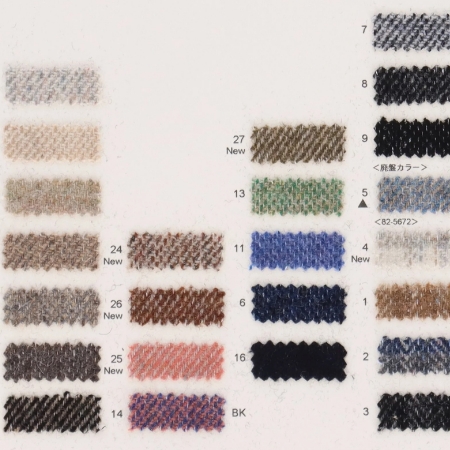 ©Ja-fabric by Takisada Nagoya ©Ja-fabric by Takisada Nagoya |
Mona Knit takes the same ethos to knitted textiles. Fully integrated, from yarn to cut/sewn fabric in Japan. As their exhibitor profile notes, “From yarn to final product, all processes are operated in Japan. Mona Knit thoroughly carries out true ‘Made in Japan’ and is dedicated to high quality and reliability”. They specialize in jacquard knits, luxurious wool jerseys and stretchy blends in impeccable constructions, rich textures, and subtle colours.
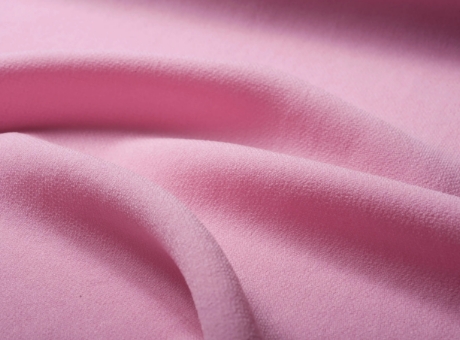 ©Hironen ©Hironen | Oharayaseni reinforces this focus on quality natural fabrics. The firm “plans and manufactures original textile with a focus on Made in Japan quality,” primarily using linen, cotton, wool and silk produced in different Japanese regions. Think brushed linen shirting, soft wool gabardine, or elegant silk-linen blends, all designed and woven domestically. Such fabrics leverage Japan’s heritage fibres (e.g. Hasumi linen from Shimane) while delivering modern performance (moisture management, wrinkle resistance). In Oharayaseni’s hands, even rustic natural threads become smooth, supple textiles worthy of high-end tailoring and ladies’ wear. |
Finally, Hironen rounds out this category. An 85-year veteran, Hironen has been at the forefront whenever new materials emerged in menswear and women’s suiting. Today, their strength is tailoring fabrics: They blend polyester durability with luxurious fibres (triacetate acetate, wool, silk) in inventive mixes. As their catalog boasts, Hironen “knows how to handle cellulosic fibres, such as triacetate,” adding natural or stretch yarns to create the perfect balance of hold, suppleness, springiness, softness and durability. In short, Hironen and peers craft the smooth, well-draping fabrics that define high-end Japanese shirting and suiting, all with a reputation for consistency and deep color.
Luxury lace craftsmanship
| Japan’s lace specialists marry traditional techniques with strict quality control to produce world-class decorative textiles. Similar to the French Leavers Lace, but for ribbons and small bands, Ochiai Lace prides itself on hybrid production: every piece involves both expert handwork and precision machinery. As their website emphasizes, Japanese lace “can’t be made without a lot of handwork by specialists,” even as engineers refine efficiency. Ochiai’s approach preserves the “tokimeki” (spark) of craftsmanship: they openly blend hand and machine work so that mass output retains a couture feel. This ethos shows in details, like scalloped edgings and 3D motifs made on Leavers looms, where Japanese artisans ensure each lace meets exacting standards. | 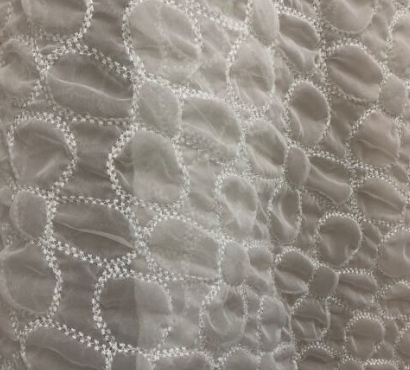 ©Ochiai Lace ©Ochiai Lace |
Sakae Lace, beyond its recognised craftsmanship in Leavers lace, has formally aligned its operations with the United Nations Sustainable Development Goals (SDG’s), focusing in particular on responsible production and environmental management. The company has implemented ISO 14001-certified environmental systems, increased the use of recycled raw materials, and invested in renewable energy, notably through the installation of solar power generation at its thai production site. By combining long-life textile craftsmanship, controlled production volumes and concrete energy and resource-efficiency measures, Sakae Lace positions traditional Leavers lace within a more responsible and future-oriented manufacturing model.
For Raschel laces, Lily Lace International adds its own flair : they develop novel yarns to differentiate, such as alpaca-washi (Japanese paper) and metallic-mixed washi yarns. The company holds ECOCERT Ecotec certifications for eco-friendly yarns.
Collectively, these manufacturers demonstrate Japan’s perfectionist approach to luxury lace: painstaking quality at every stage – from patented yarns to the final motif – yields textiles that grace haute couture runways worldwide.
Sustainability and innovation
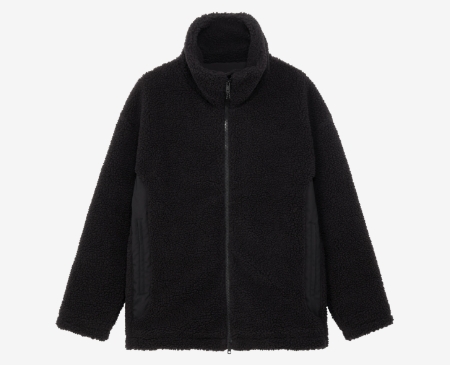 ©Bioworks’ PlaX fleece ©Bioworks’ PlaX fleece | Japanese mills are increasingly leaders in sustainable fibers and circularity. Bioworks exemplifies this new wave. Founded in 2015, Bioworks developed PlaX, a modified polylactic acid (PLA) fibre derived from plants (such as sugarcane) as a drop-in substitute for polyester. In 2025, (as 10 years ago, with Spiber) the Goldwin’s brands The North Face and Neutralworks debuted PlaX in their fall/winter fleece outerwear. Bioworks reports PlaX cuts CO₂ emissions by ~70% in filament extrusion versus nylon and 50% versus polyester, and uses 90% less water than cotton fiber production. (See image: Bioworks’ PlaX fleece used by TNF and NEUTRALWORKS.) |
Along their recycled polyester with a full GRS certified supply chain (yarn, weaving, dyeing), Hironen also bets on the future of cellulosics. While they work with already established Soalon’s triacetate fiber made from wood pulp, developed by SOALON Corporation, a subsidiary of GSI Creos Corporation, they also do incorporate also Eastman’s Naia™ Renew, a closed-loop, chemically recycled cellulose acetate (60% sustainably sourced wood pulp and 40% certified recycled waste material) to serve the demand of fossil-free fibres and textiles. In short, Hironen weaves together innovation and certification to ensure every step of their material – from thread to dyehouse – meets high social and environmental standards.
All these efforts reflect Japan’s larger drive: relentless refinement, even of sustainability. In every category, Japan’s mills balance pride in heritage with cutting-edge R&D. Whether it’s a hand-finished lace edging or a bioengineered fiber, the end products serve the global market’s demands for both style and substance. Together, these companies demonstrate how Japan’s perfectionism and technological mastery continue to thread new possibilities into the fabric of modern design, to be discovered at Première Vision Paris!
 |  |